
Gold has been a symbol of wealth and security for thousands of years. What has changed is how people access it. Investors are no longer simply asking how much gold they can own. They are asking how they can access it, use it and participate in its value.
The Financial Times recently captured this shift with the headline, “Digital gold market triples to $55bn as younger investors pile in.”
This is more than a story about younger investors embracing technology. It signals a real shift in how one of the world’s oldest stores of value is entering the digital economy.
And it raises an important question: If technology can change how we own gold, why can’t it also change how we value and own the gold digitally that remains in the ground?
Gold’s growing importance
The numbers tell a compelling story.
According to the World Gold Council, global gold-backed ETFs attracted US$31 billion in inflows during the third quarter of 2026, a quarterly record. Total holdings reached a record 4,256 tonnes by September’s end.
This demand continued despite September’s 8.5% decline in the gold price, which finished the month at approximately US$4,176 per ounce. Physically backed ETFs still drew about US$10 billion of inflows in September alone.
Central banks are also reinforcing gold’s strategic importance. The World Gold Council’s 2026 Central Bank Gold Reserves Survey found that 89% of respondents expect global central bank gold reserves to increase over the following 12 months. A record 45% expect their own institutions to increase their holdings.
Taken together, the data suggest gold remains relevant, even as the ways in which people can access it evolve.
The next opportunity: Preserved Gold
Historically, gold’s economic value has largely been realised through extraction, refining, storage and trading.
But what about verified gold deposits that remain underground?
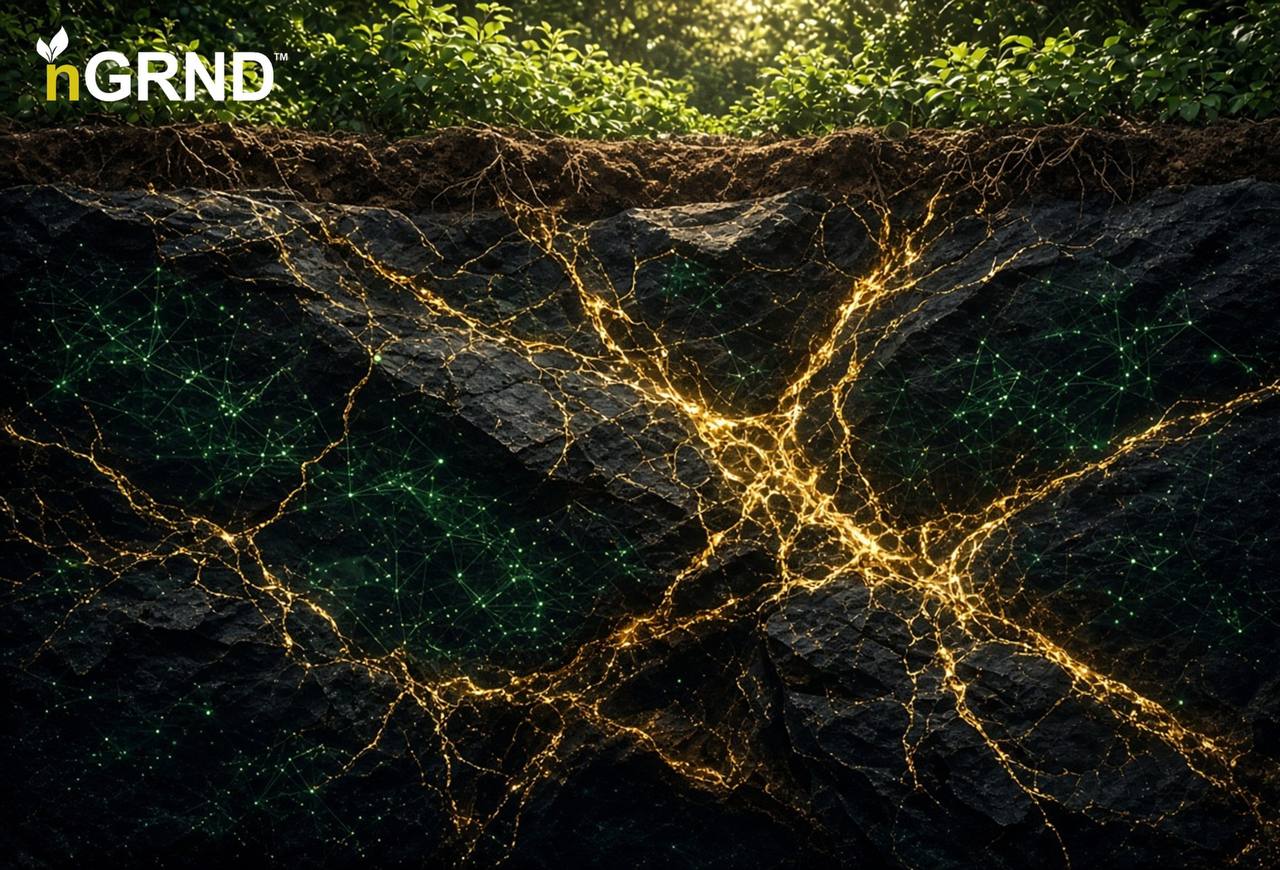
The nGRND Gold Protocol is advancing a different thesis: Gold does not necessarily need to be extracted to become part of a meaningful digital economic ecosystem.
Preserved Gold refers to verified in-ground gold that remains unmined. Rather than treating extraction as the only path to economic relevance, the protocol explores how geological verification, blockchain technology and responsible stewardship can support new forms of secure, trusted value creation.
This distinction matters.
Traditional mining can require significant energy, water, land disturbance and carbon emissions. Preserving verified deposits offers an opportunity to pursue alternative economic models while delivering measured impact from ESG and SDG alternative land use.
The goal is not to replace mining or suggest that every underground deposit has the same value as refined bullion.
It is to recognise that preservation itself may have economic significance when supported by credible verification, transparent structures and additional measured impact outcomes.
From passive ownership to active participation
The rise of digital gold may also say something about investor behaviour. More investors appear to want accessibility, transparency and opportunities to engage beyond simply holding an asset.
This is where the nGRND Gold Protocol introduces another dimension.
Its NGRND utility token powers a Staking & Rewards Ecosystem built around eight Participation Streams: Governance, Impact, Play, Learn, Advocate, Refer, Wellbeing and Agent.
Through Dynamic Soulbound Tokens (DSBTs), verified Participants can establish an on-chain identity, engage with ecosystem partners such as Predictfully, Astra Nova and GAMEE’s Gold Fest and earn Reward Points for meaningful activities.
The protocol also intends to distribute eligible rewards in stablecoins, subject to applicable regulations and qualifications, reducing reliance on native-token emissions and associated selling pressure.
NGRND drives the participation. Stablecoins provide the Rewards.
Importantly, the NGRND utility token is not itself a claim on physical gold. A separately contemplated nGRND Gold Token would represent a distinct real-world-asset model linked to Preserved Gold.
Building a community around a new idea
Technology alone does not create a successful ecosystem. People do.
Since launching on August 6, 2026, the nGRND Gold Protocol has reported more than 313,000 Participants completing over 6.6 million tasks.
These figures point to early engagement with a model that connects digital identity, participation, rewards and a distinctive approach to gold ownership.
The opportunity extends beyond token ownership to partnerships, community development and measurable impact.
The future of gold may not require moving it
The Financial Times’ reporting on digital gold and the World Gold Council’s research point toward an industry undergoing meaningful change.
Digital access is expanding while institutional demand remains substantial and new generations are discovering gold through technology.
The next chapter may involve rethinking not only how gold is owned, but how its value is recognized.
At the nGRND Gold Protocol, we believe that the future should include gold that stays where nature placed it.
Because the future of gold may not be defined solely by how much we extract, but also by what we choose to preserve.
Sources and further reading
Financial Times — Digital gold market triples to $55bn as younger investors pile in https://www.ft.com/content/ec362974-2f42-4938-84e6-f8c1e72c256a?syn-25a6b1a6=1
World Gold Council — Gold ETF Flows: September 2026 https://www.gold.org/goldhub/research/gold-etfs-holdings-and-flows/2026/10
World Gold Council — Central Bank Gold Reserves Survey 2026 https://www.gold.org/goldhub/research/central-bank-gold-reserves-survey-2026
World Gold Council — Gold Market Commentary: September 2026 https://www.gold.org/goldhub/research/gold-market-commentary-september-2026
Note: The Financial Times article may require a subscription. nGRND Gold Protocol participation figures are company-reported and were not independently verified for this article.
Get grounded 🪙 | www.ngrnd.io | @nGRND_io